
Diagnosing and resolving damp, condensation and hidden leaks
Damp and Leak Detection
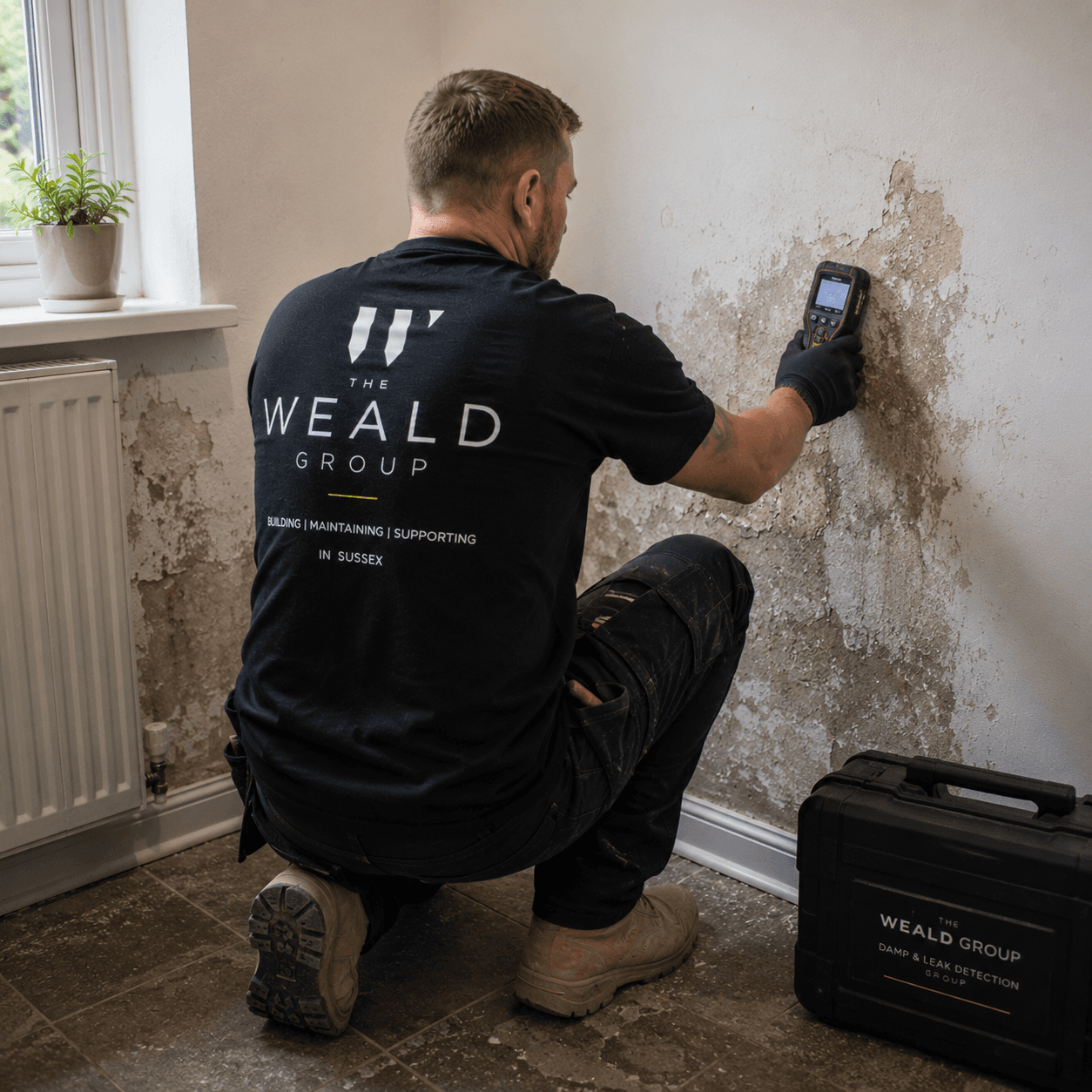
Damp and leak detection identifies the underlying cause of damp patches, mould, musty smells or unexplained damage — whether that's rising damp, penetrating damp, condensation, or a hidden plumbing leak — before any repair work is recommended.
Definition
What Damp & Leak Detection covers
Damp has several distinct causes that require different remedies: rising damp (moisture drawn up through a wall), penetrating damp (water entering through a defect in the building fabric), condensation (moisture from everyday living meeting cold surfaces), and hidden leaks from plumbing or roofing. Correct diagnosis matters because treating the wrong cause — for example, tanking a wall affected by condensation — doesn't solve the problem and can make it worse.
Suitable for
- Damp patches, mould growth or musty smells with no obvious cause
- Unexplained rises in water usage suggesting a hidden leak
- Pre-purchase or pre-renovation damp surveys
- Properties where a previous damp treatment hasn't resolved the issue
Not suitable for
- Active flooding or burst pipes, which need an emergency plumber immediately rather than a diagnostic survey
- Structural subsidence investigation, which needs a structural engineer rather than a damp specialist
Process
How the work is carried out
- 01
Survey
Visual inspection along with moisture meter readings and, where needed, thermal imaging or leak detection equipment.
- 02
Diagnosis
Identifying the specific cause — rising damp, penetrating damp, condensation or a hidden leak.
- 03
Report and recommendation
A clear written explanation of the cause and the appropriate remedy, avoiding unnecessary treatment.
- 04
Repair
Carrying out the correct remedy, whether that's a leak repair, ventilation improvement, or building fabric repair.
- 05
Follow-up
Confirming the issue has resolved, particularly for condensation-related problems that need time to settle.
Typical timescale
A diagnostic survey is typically completed within a visit, with a written report following shortly after. Repair timescales depend entirely on the cause identified.
Cost guidance
A damp or leak survey in our area typically costs £150–£400. Survey costs are quoted upfront and are separate from any repair work, which is priced once the cause is confirmed — we don't recommend treatment before diagnosis.
Limitations and exclusions
- We diagnose and repair the building fabric and plumbing causes of damp; we don't sell or apply chemical damp-proofing treatments without a confirmed diagnosis that they're the appropriate remedy
- Underlying structural issues found during a damp survey are referred to a structural engineer
- Historic damage caused before our involvement (e.g. existing timber decay) is identified and quoted separately
Areas we cover
Damp & Leak Detection across Sussex, Surrey, Kent and South London
Local property styles, planning authorities and neighbourhood coverage for damp & leak detection in each town we work in.
Related services
You may also need
FAQs
Damp & Leak Detection FAQs
How do I know if it's damp or condensation?
Condensation typically appears on cold surfaces like windows and external walls, especially in bathrooms and kitchens, and varies with the seasons. Rising and penetrating damp tend to leave a more consistent, often tide-marked pattern. A proper diagnosis avoids guessing which one you're dealing with.
Can you find a hidden leak without lifting floors?
Often yes — leak detection equipment can trace many hidden leaks without invasive work, though some cases do need limited investigative opening-up to confirm the exact location before repair.
Discuss your damp & leak detection project
Tell us about the property and what you have in mind, and we'll arrange a site visit.
Last reviewed 2026-07-19.