
Whole-house and phased refurbishment of existing homes
Renovations and Refurbishments
Renovation and refurbishment work updates or restores an existing property, ranging from a single room refresh to a full strip-out and rebuild of the internal fabric, and can include structural alterations, rewiring, replumbing, insulation upgrades and new finishes.
Definition
What Renovations covers
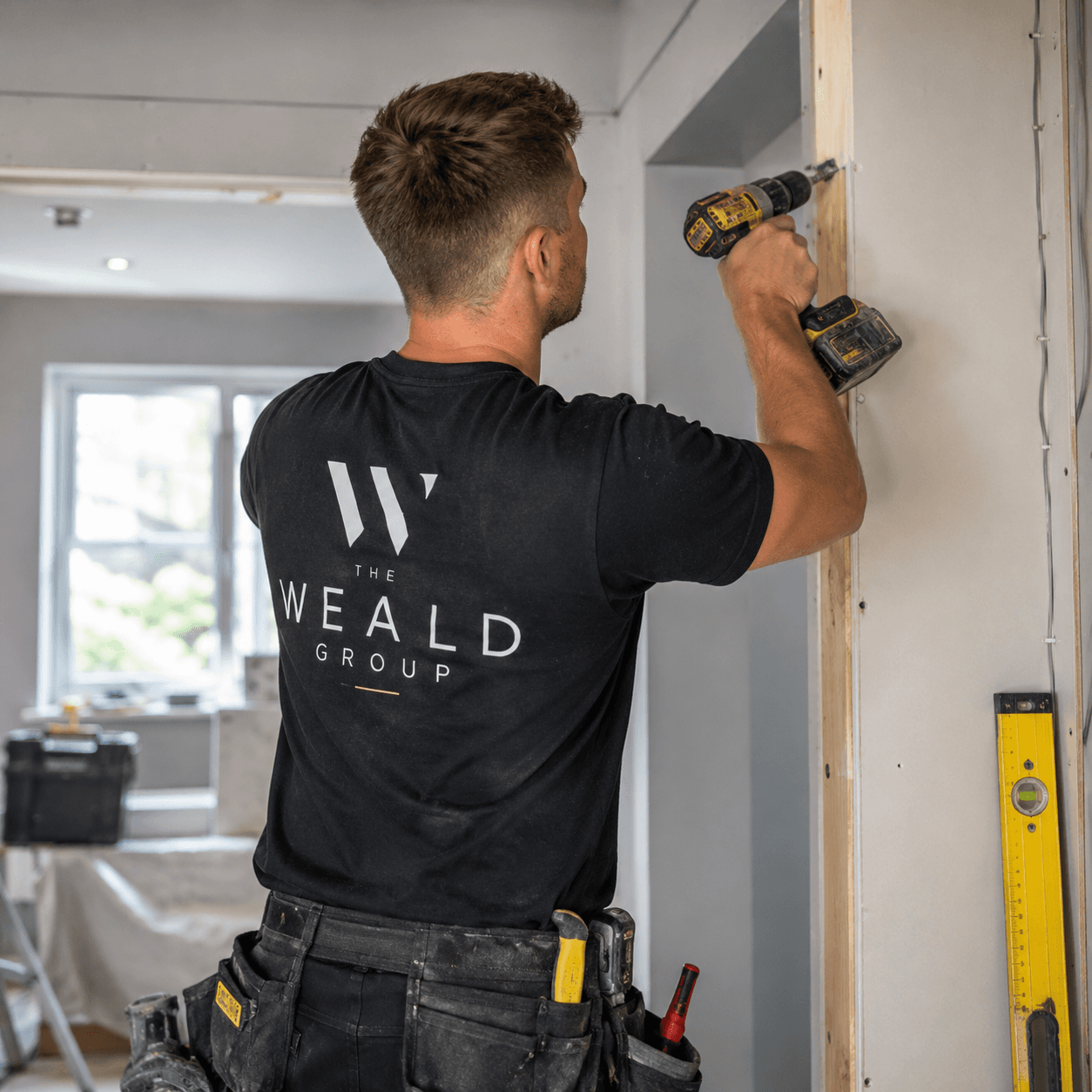
Renovation covers work to update, repair or modernise an existing building without necessarily changing its footprint or use. It spans everything from redecoration and kitchen or bathroom replacement through to a full back-to-brick refurbishment involving new services, insulation, floors and internal layout changes.
Suitable for
- Older or period properties needing modernisation
- Recently purchased homes requiring updating before or after moving in
- Households wanting to reconfigure internal layout without extending
Not suitable for
- Properties requiring emergency stabilisation (a structural engineer should assess these first)
- Very minor cosmetic touch-ups better suited to a decorator
Process
How the work is carried out
- 01
Survey and scoping
Assessing the existing building fabric, services and any structural or damp issues.
- 02
Design and specification
Agreeing layout changes, finishes and a detailed specification, including any provisional sums for items only visible once work starts.
- 03
Approvals
Building Regulations and, where relevant, planning permission or listed building consent.
- 04
Strip-out and structural work
Removing existing finishes and carrying out any structural alterations.
- 05
Services and fit-out
Electrics, plumbing, heating, insulation, plastering and finishes.
- 06
Completion
Snagging, sign-off and handover.
Typical timescale
A single-room refurbishment can take a small number of weeks; a full house renovation typically runs several months depending on scope and the condition found once work is opened up. Set out in your project programme.
Cost guidance
A whole-house renovation in our area typically costs £600–£1,200 per m², depending on how much of the work is structural versus cosmetic. Costs vary widely with the extent of structural change, condition of existing services and specification level, so an itemised quotation follows survey, with provisional sums flagged for anything that cannot be priced with certainty until opened up.
Limitations and exclusions
- Concealed defects (such as timber decay or historic damp) found once work is opened up are priced separately as they are identified
- Listed building consent, where applicable, must be secured before affected works begin
- Furniture, loose fittings and appliances are excluded unless specified
Areas we cover
Renovations across Sussex, Surrey, Kent and South London
Local property styles, planning authorities and neighbourhood coverage for renovations in each town we work in.
Related services
You may also need
Guidance
Advice on renovations
FAQs
Renovations FAQs
Can you renovate a property in phases while we live in it?
Often yes, particularly where the property can be divided into workable zones. We discuss phasing options and the level of disruption at the planning stage so you can make an informed decision.
What happens if you find problems once walls are opened up?
We flag any concealed issues, such as damp or structural decay, as soon as they are found, explain the implications, and agree a priced way forward with you before proceeding — this is why provisional sums are built into most renovation quotations.
Do period properties need special consideration during renovation?
Yes. Older buildings often need breathable materials and different structural approaches to modern construction, and may be listed or in a conservation area, which affects what consents are needed. We assess this during survey.
Do you manage the project or do we deal with each trade separately?
We manage the whole project as main contractor, sequencing structural, mechanical and finishing trades under one programme and one point of contact, so you're not coordinating separate tradespeople or chasing separate invoices.
Can you work to a fixed budget and tell us what fits within it?
Yes, we can scope a specification to a target budget, though on older properties we still recommend a contingency for concealed defects that can't be priced until walls or floors are opened up.
Discuss your renovations project
Tell us about the property and what you have in mind, and we'll arrange a site visit.
Last reviewed 2026-07-19.