
Damp in Older Homes: Common Causes and How They're Fixed
Damp in a period property is rarely one single problem, and the wrong fix can trap moisture rather than solve it. Here's how to think about diagnosis before treatment.
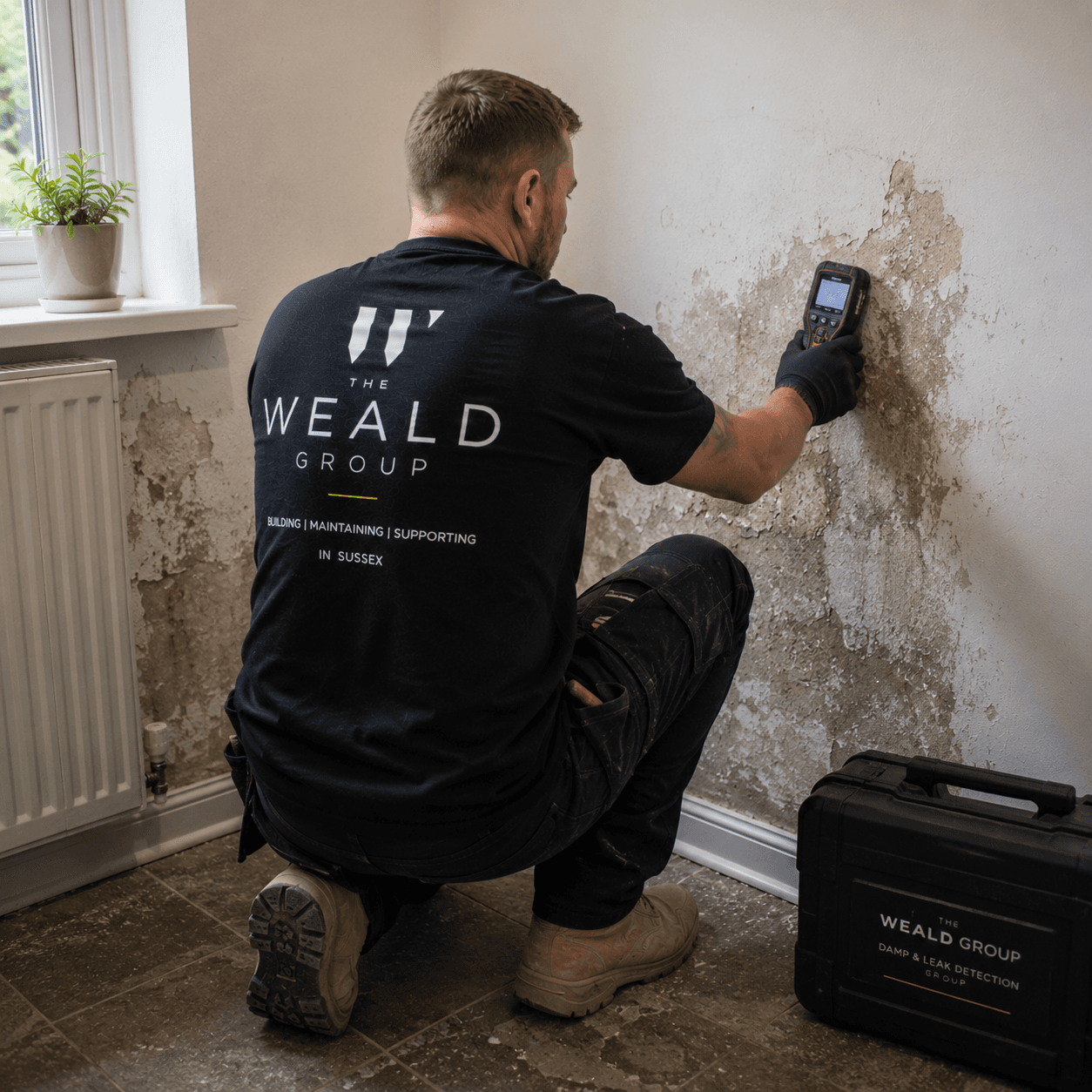
Short answer: damp in an older property is usually one (or a combination) of penetrating damp, rising damp, condensation, or a plumbing leak — and each needs a different fix. Treating the symptom without correctly diagnosing the cause, particularly on solid-walled period buildings, can make the problem worse.
The common causes
- Penetrating damp: water getting in from outside — defective guttering, cracked render, failed pointing, or a leaking roof — showing as damp patches that often correlate with rainfall.
- Rising damp: groundwater moving up through a wall, more common where a damp-proof course is missing, damaged, or has been bridged by an external path or flower bed built up against the wall.
- Condensation: moisture from everyday living (cooking, bathing, drying clothes indoors) landing on cold surfaces, often worse in poorly ventilated rooms and a very common cause mistaken for rising damp.
- Plumbing leaks: a slow leak from a pipe, tank or appliance, sometimes hidden within a floor or wall build-up for a long time before it becomes visible.
Why period properties need a different approach
Many older solid-walled buildings were designed to let moisture pass through and evaporate ("breathe"), using lime mortar and permeable finishes. Applying modern cement render, gypsum plaster or impermeable paint to a solid wall can trap moisture within the wall rather than letting it evaporate, sometimes making damp worse even though the surface looks dry.
Getting the diagnosis right
A proper diagnosis looks at the pattern of the damp, the construction of the walls, and rules out condensation and plumbing faults before assuming a structural cause like rising damp. This matters because the fixes are different and not interchangeable — reinstating a damp-proof course does nothing for a condensation problem, and improving ventilation does nothing for a leaking gutter.
How we approach it in a renovation
Where damp is identified or suspected during a renovation, we assess the likely cause as part of the survey rather than defaulting to a single standard treatment, and use breathable materials appropriate to the building's construction where that's the right approach.
Planning and Building Regulations rules are set nationally but applied locally, and they change from time to time. This article reflects general guidance correct at the time of publication — always confirm the current position for your specific property with your local planning authority or at gov.uk and the Planning Portal before relying on it.
Talk to us about your project
Tell us about the property and what you have in mind. We'll arrange a site visit and provide a written, itemised quotation.