
Understanding Party Wall Agreements
If your project involves work on or near a shared wall or boundary, the Party Wall etc. Act 1996 may apply — separately from planning permission and Building Regulations.
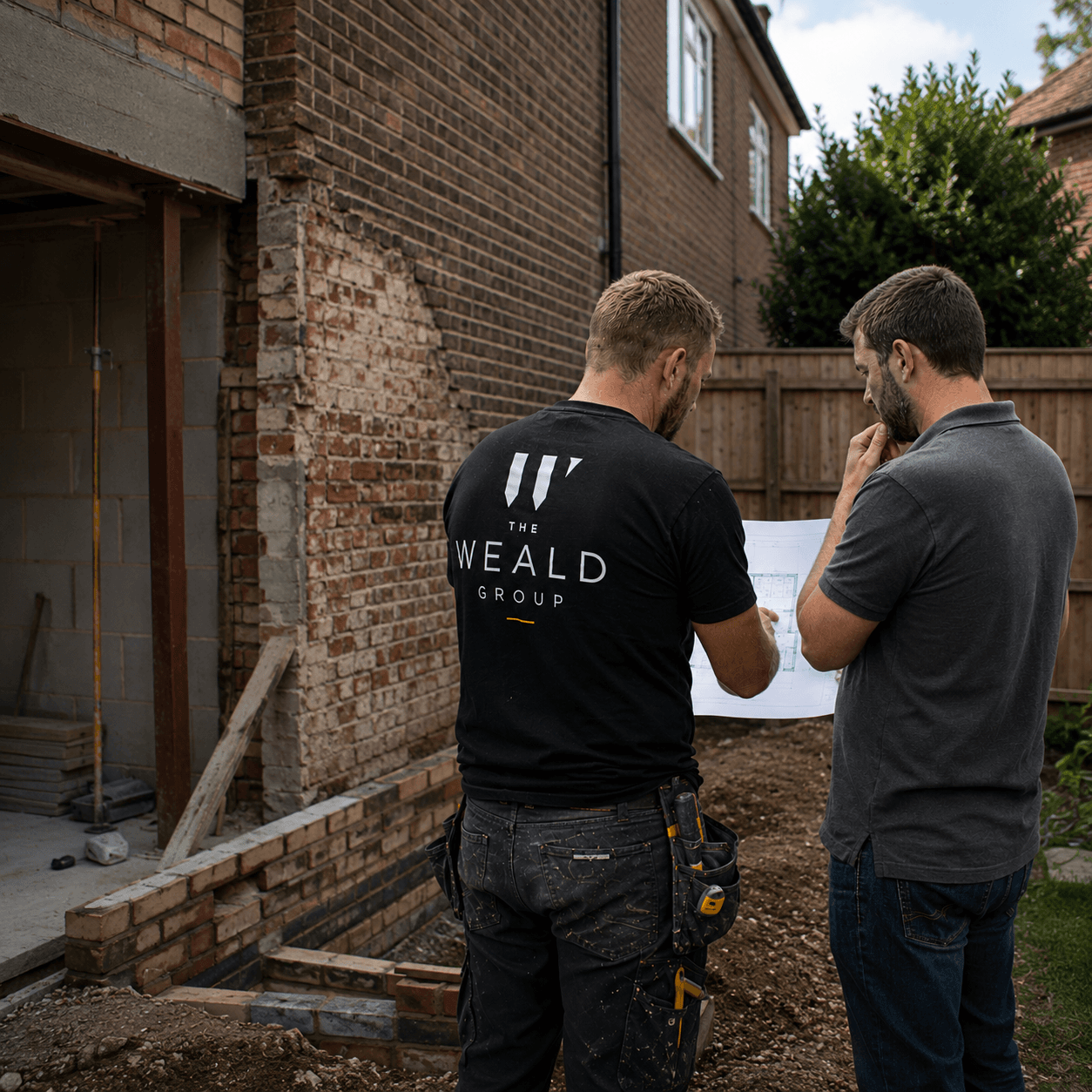
Short answer: the Party Wall etc. Act 1996 applies to specific types of work on or near a shared wall, boundary or structure with a neighbouring property — most commonly building on the boundary line, work directly to a shared wall, or excavating near a neighbour's foundations. It is separate from planning permission and Building Regulations, and generally needs to be dealt with before work starts.
When it typically applies
- Building a new wall on or astride the boundary with a neighbouring property
- Cutting into, raising, or otherwise carrying out work directly to a shared (party) wall
- Excavating within a set distance of a neighbouring building's foundations, depending on the depth of the new foundations relative to theirs
How it differs from planning permission
Planning permission and Building Regulations approval deal with whether and how you're allowed to build. A party wall agreement is a separate legal process dealing specifically with the impact of certain works on an adjoining owner's property, and protects both sides — it doesn't replace the need for planning or Building Regulations where those apply.
The general process
Where the Act applies, formal written notice must usually be served on affected neighbours before work starts, giving a minimum notice period. If the neighbour consents in writing, work can proceed. If they dissent, or don't respond within the set period, a party wall surveyor (or surveyors, one for each side, or an agreed surveyor for both) is appointed to prepare a party wall award setting out how and when the work can be carried out.
Why it's worth dealing with properly
Serving notice correctly and allowing the right amount of time protects your programme as much as it protects your neighbour — starting notifiable work without the proper notice can lead to a neighbour seeking an injunction to stop work. We flag where a party wall agreement is likely to be needed at the feasibility stage, so it can run in parallel with design and planning rather than causing a delay later.
Planning and Building Regulations rules are set nationally but applied locally, and they change from time to time. This article reflects general guidance correct at the time of publication — always confirm the current position for your specific property with your local planning authority or at gov.uk and the Planning Portal before relying on it.
Talk to us about your project
Tell us about the property and what you have in mind. We'll arrange a site visit and provide a written, itemised quotation.