
F-Gas Regulations Explained: Why New Air Conditioning Uses R32 or R454B
UK F-Gas regulations have phased out R410A in new domestic air conditioning systems in favour of lower-GWP refrigerants. Here is what R32 and R454B mean for a new or replacement installation.
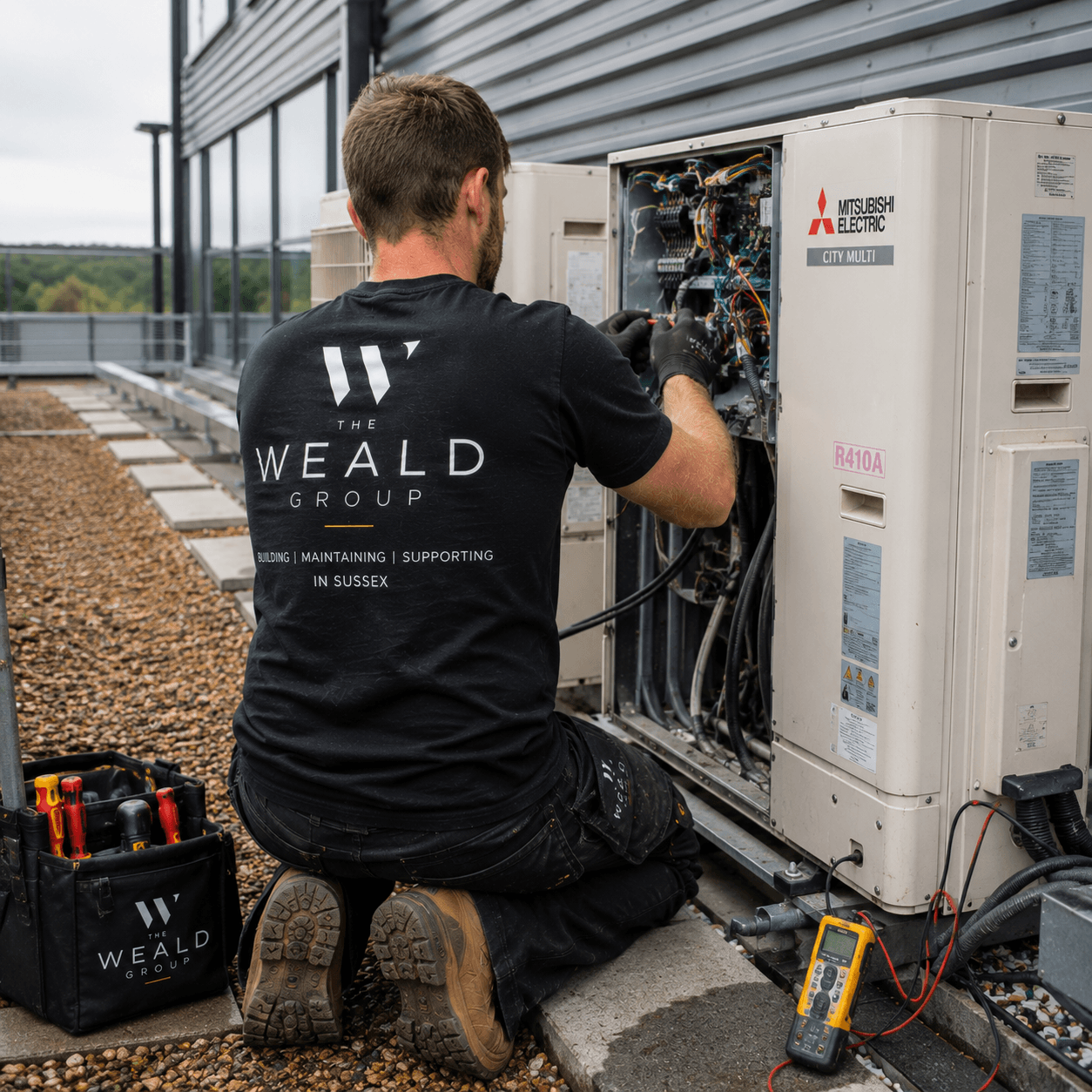
Short answer: UK air conditioning installations now use lower global warming potential (GWP) refrigerants — typically R32 or R454B — instead of the older R410A, because F-Gas regulations have progressively restricted refrigerants above a set GWP threshold from being used in new equipment. Refrigerant handling must be carried out by an F-Gas certified engineer, which is a legal requirement separate from Building Regulations or planning permission.
What F-Gas regulations are
"F-Gas" refers to fluorinated gases — the refrigerants used in air conditioning and refrigeration systems, some of which are powerful greenhouse gases if released into the atmosphere. UK and EU F-Gas regulations control which refrigerants can be used in new equipment, restrict who can legally handle them, and are steadily phasing down the total volume of high-GWP refrigerant allowed onto the market over time.
Why R410A has been phased out for new systems
R410A, the refrigerant used in the majority of split air conditioning systems installed over the last couple of decades, has a global warming potential in the low thousands. As the phase-down has tightened, new domestic split systems using refrigerants above a GWP threshold have been restricted, which has effectively ended R410A as an option for new residential installations — engineers now specify lower-GWP alternatives instead.
R32 and R454B
The two refrigerants most commonly specified in new UK domestic systems are R32 and R454B, both with a significantly lower GWP than R410A. Neither is a drop-in replacement for an older R410A system — different refrigerants require components rated for that refrigerant, so a system upgrade means new equipment rather than simply refilling an existing unit with a different gas.
What this means if you have an older R410A system
An existing R410A system can continue to be serviced, though restrictions on the supply of virgin R410A for larger commercial systems have tightened further, which can affect cost and availability of refrigerant for repairs over time. If a system needs a major refrigerant-related repair, this is often the point at which replacing it with an R32 or R454B system becomes the more sensible option rather than continuing to service an ageing unit on a refrigerant that's becoming harder to source.
Why F-Gas certification matters
Handling refrigerant — connecting pipework, pressure testing, charging a system — is restricted by law to individuals holding the relevant F-Gas qualification, regardless of how straightforward the rest of the installation looks. This is separate from, and in addition to, any electrical certification the installation also requires. Ask any installer to confirm F-Gas certification before refrigerant work begins; it should be provided as a matter of course alongside the rest of your installation paperwork.
See also our guide to what to expect when booking air conditioning during high-demand periods, and our guide to planning permission for air conditioning.
F-Gas regulation is a live, evolving area of UK and retained EU law, and specific GWP thresholds and phase-down schedules are subject to change. This article reflects general guidance correct at the time of publication — always confirm the current position with your installer or at gov.uk before relying on it for a specific project.
Talk to us about your project
Tell us about the property and what you have in mind. We'll arrange a site visit and provide a written, itemised quotation.