
Domestic pest identification and treatment
Pest Control
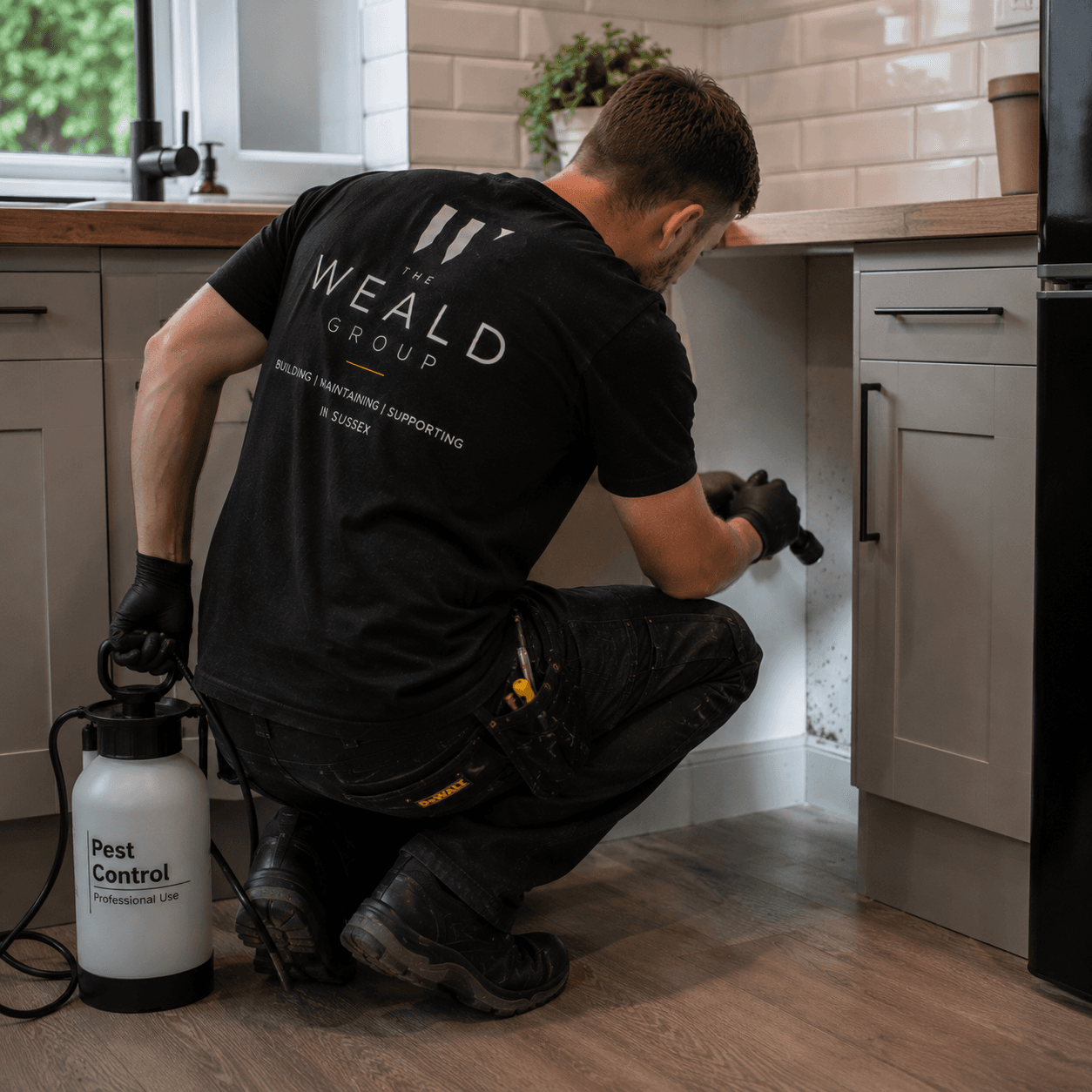
Pest control covers identifying and treating common domestic pests — rodents, insects and other infestations — along with proofing work such as sealing entry points to help prevent recurrence.
Definition
What Pest Control covers
Domestic pest control starts with correctly identifying the pest and the extent of the problem, followed by an appropriate treatment plan. Because building fabric often plays a role in how pests access a property, we also address proofing — sealing gaps, repairing damaged airbricks or vents — alongside treatment, rather than treating symptoms alone.
Suitable for
- Rodent infestations (mice, rats)
- Common insect pests in the home
- Proofing work to prevent pest entry points, such as damaged airbricks or gaps around pipework
Not suitable for
- Wasp nest removal at height without safe access — we assess access requirements before attending
- Pest issues requiring specialist licensed treatment beyond standard domestic pest control, which we refer to an appropriately licensed specialist
Process
How the work is carried out
- 01
Inspection
Identifying the pest, the extent of the problem, and likely entry points.
- 02
Treatment plan
Agreeing an appropriate, proportionate treatment approach.
- 03
Treatment
Carrying out treatment safely, with clear guidance on any precautions needed.
- 04
Proofing
Sealing identified entry points where building fabric is contributing to the problem.
- 05
Follow-up
Confirming the treatment has been effective, with a further visit if needed.
Typical timescale
An initial inspection and treatment is typically completed within a visit, with follow-up visits scheduled where the pest life cycle requires it.
Cost guidance
Pest treatment in our area typically costs £75–£250 depending on the pest, with a wasp nest usually £50–£75 and rodent or multi-visit treatments £120–£240. Quoted after an inspection rather than a generic call-out rate.
Limitations and exclusions
- Treatments requiring a specialist license beyond standard domestic pest control are referred to an appropriately licensed contractor
- Structural repairs beyond proofing (e.g. significant timber damage) are quoted as separate building work
Areas we cover
Pest Control across Sussex, Surrey, Kent and South London
Local property styles, planning authorities and neighbourhood coverage for pest control in each town we work in.
Related services
You may also need
FAQs
Pest Control FAQs
How do you stop pests coming back after treatment?
Alongside treating the immediate problem, we identify and seal likely entry points in the building fabric — damaged airbricks, gaps around pipework, or similar — since proofing is usually as important as the treatment itself for preventing recurrence.
Discuss your pest control project
Tell us about the property and what you have in mind, and we'll arrange a site visit.
Last reviewed 2026-07-19.